
Navigating the Unknown: A Solo Quest
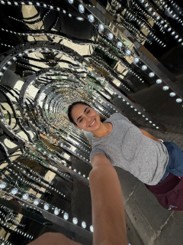 As I approach the end of my Bachelor of Science (Biomedical Science) degree, before commencing Medicine next year, I felt that the time was right to venture beyond the familiarity of Brisbane and challenge myself in a completely new environment. I hoped to use the experience as an opportunity to develop my leadership, form new connections, challenge myself physically and mentally, and learn from people and cultures different from my own.
As a recipient of the Liveris Academy Travel Grant, I was fortunate to have the opportunity to supplement my travel costs and embark on this experience. Over the course of my journey, I deliberately sought experiences that would build upon different aspects of my character. In doing so, I discovered that travelling to unfamiliar places was not only an exercise in exploring the world around me, but also an opportunity to better understand myself.
Academic Reflection
One of the most intellectually stimulating parts of my trip was attending a summer course at Oxford on the philosophy and ethics of artificial intelligence. Coming from a biomedical science background and preparing to enter medicine, I was curious about how emerging technologies might influence the way we understand intelligence, humanity and decision-making.
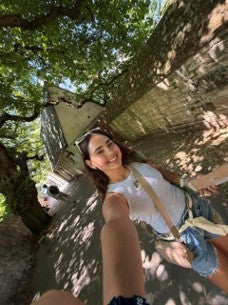 The course prompted me to think beyond the practical applications of artificial intelligence and instead question what intelligence actually means. Discussions surrounding Turing’s question, “Can a machine think?”, and Fodor’s contemplation of whether “brains compute” encouraged me to reconsider the boundaries between human cognition and artificial intelligence. I found myself particularly fascinated by how seamlessly AI has already integrated itself into everyday life, often occupying gaps in our routines that we may not have consciously recognised, including even my playlist choices!
There were, unsurprisingly, differing attitudes towards this rapid technological progression. Some students were enthusiastic about the possibilities of AI, while others were more cautious about its implications. The conversations helped me explore the competing perspectives, ask better questions, and refine my understanding of its benefits and drawbacks. The topic of AI has relevance in the medical sector, as surgical, diagnostic, and note-taking tools are all increasingly being shaped by technology. Possessing the ability to evaluate these technologies and their potential implications will be, I imagine, just as much a pre-requisite being a good physician as clinical knowledge.
Connection and Community
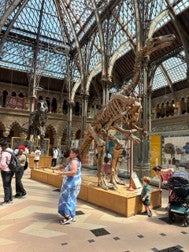 Visting London was a particular highlight. I enjoyed the energy and organised chaos of the city, even if I quickly discovered that navigating a crowded city required a different interpretation of personal space - and that Londoners appeared to struggle when temperatures rose above 25°C! I explored museums and landmarks, including the Natural History Museum and the Tower of London, but some of my most memorable experiences came from conversations with people I hadn’t planned for on my ‘to-do’ list.
I met several British students who introduced me to the traditional pub experience, and we watched a World Cup game together. Their enthusiasm for football gave me an insight into how deeply the sport is embedded within British culture, but more importantly, it reminded me how easily a shared experience can bridge people together.
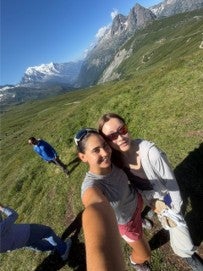
This sense of connection was similarly apparent during my hike through the French and Swiss Alps around Mont Blanc. I travelled with people from a range of countries and backgrounds, and what began as a group of strangers gradually became a small community. We encouraged one another through difficult sections of the hike, celebrated reaching each mountain pass, or col in French, and shared stories along the way.
I also found myself learning through conversations with the people I met. An American internal medicine specialist shared his experiences of the US healthcare system, including the distinction between adult general practice and paediatric care. A Singaporean hiker introduced me to different perspectives on healthcare financing and the role of private insurance and out-of-pocket costs. A Japanese dermatologist I shared a room with spoke about the cosmetic and therapeutic applications of Botox and injections, as well as her ambitions to establish a private practice while maintaining a work-life balance.
These conversations were valuable because they allowed me to glimpse careers and healthcare systems beyond my own experience. I was reassured that there is no single way to become a doctor or define professional success.
 Perhaps most importantly, I learnt something about myself. I had initially imagined that travelling alone would mean experiencing everything independently. Instead, I discovered that travelling alone can actually make you more receptive to connection. Without familiar companions around me, I became more willing to start conversations, ask questions and accept invitations. I realised that while I genuinely enjoy travelling independently, some experiences become richer when shared with others.
Cultural Reflection
I also sought to experience each destination beyond its traditional tourist attractions, by using public transport, visiting local markets and parks, trying regional foods and observing the everyday rhythms of the communities I visited.
Oxford particularly captured my attention. I enjoyed its slower yet purposeful pace of life: a walkable environment where big ideas seemed to waft in the air, alongside a gentle, almost leisurely rhythm. The bustle of students and school groups contrasted with the historic architecture and quiet streets. At the markets, I was struck by the diversity of people and cultures represented within such a small environment. I encountered Indian, Pakistani and Greek vendors, and interactions ranged from being offered free souvlaki meat by a Greek vendor to sampling spicy curry from a Pakistani stall.
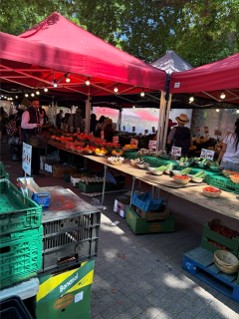 These small interactions made me reflect on how culture is not confined to museums or historical landmarks. It is also expressed through food, conversation, migration and everyday interactions between people. I left Oxford with a handmade lavender soap bar, and a greater appreciation for the diversity of cultures that can exist within a single community.
London offered a different cultural experience. I was fascinated by how each suburb seemed to have its own identity within the broader metropolis. Paddington had its grand white terraces and orderly streets, Soho had a creative energy, West End was filled with theatrical bustle, while the City reflected a distinctly business-oriented atmosphere. I enjoyed navigating these different micro-environments by e-bike, weaving between red buses and black cabs - a rather different experience to cycling through Brisbane!
In the Alps, language became another way of connecting with culture. The trails brought together French, Italian, Swiss-German and international hikers. From ‘bonjour’ to ‘bravo’, and ‘danke’ when overtaking, I found myself adopting simple phrases to passersby and offering new-found cheers of encouragement. I also practised my conversational French with our guide, which made me appreciate how much effort it takes to communicate in a foreign language and how impressive it is to be multilingual.
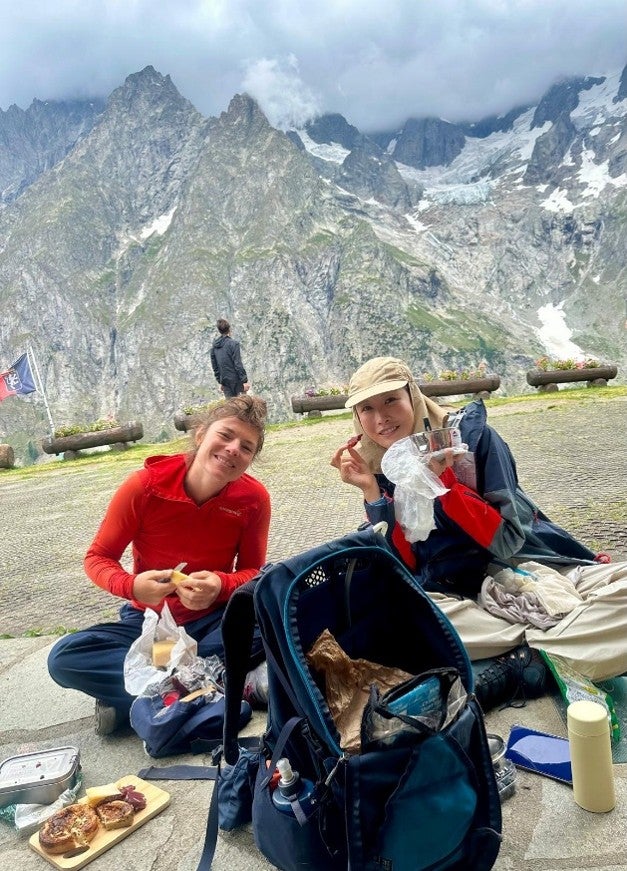 The Alps also gave me a more tangible understanding of environmental change. I learnt about the importance of the glaciers as reservoirs of fresh water for France and witnessed their retreat firsthand. Seeing the physical effects of climate change and the locals’ concerns made the issue feel more pressing as the consequences can be lasting for communities.
Leadership and Navigating the Unknown
Perhaps the greatest lesson of travelling alone was what it taught me about leadership.
Before this trip, I primarily associated leadership with leading other people. Travelling alone made me realise that leadership also begins with being able to lead yourself. I was responsible for my own time, belongings, decisions, safety and ability to navigate unfamiliar situations. Getting from one destination to another on time required organisation and forward planning, particularly when others were relying on me.
I also learnt that leadership involves listening. Conversations with students in Oxford about AI challenged me to consider perspectives different from my own. I became more conscious of asking questions when I wanted to probe deeper. This is a skill I hope to carry into medicine, where effective leadership requires curiosity and collaboration rather than always having the answer immediately.
One of the most memorable demonstrations of this came while travelling to the airport in London. With a heavy backpack, only 5% phone battery, limited service, delayed tube lines, and a flight to catch, I found myself navigating a crowded street while trying to locate the nearest train station. For a moment, the possibility of missing my flight felt more real than I would have liked! I could have panicked, but instead I stopped, assessed the situation and asked a passer-by for help. Fortunately, he had just come from the station and was able to point me in the right direction.
I eventually reached the airport, only to encounter another logistical challenge when the check-in staff redirected me to a different line for my duffel bag. Although stressful at the time, the experience became an important lesson from the trip. I learnt that being independent does not mean knowing everything yourself. Sometimes, good judgement means recognising when you need help and having the confidence to ask for it.
I also learnt the importance of planning ahead. My journey to the airport could have been considerably less stressful had I anticipated potential disruptions and organised my travel in advance! It was a simple lesson, but one that I know will remain relevant beyond travel.
Looking Back
When I reflect on this journey, I realise that the most valuable part of the trip was not any single destination. It was the accumulation of small moments of uncertainty, curiosity and connection. 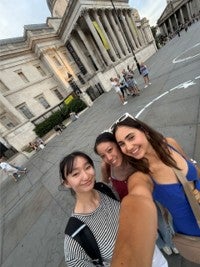
I learnt that I enjoy navigating unfamiliar environments, that I am capable of adapting when plans change, and that independence does not have to mean isolation. I learnt to ask questions more readily, to listen to perspectives different from my own and to recognise that some of the most meaningful learning happens outside a classroom.
The journey also reinforced why I am excited to enter medicine. Medicine will require scientific curiosity, cultural awareness, communication, resilience and leadership. My time in Europe allowed me to practise each of these qualities in an environment where I was constantly required to step outside what was familiar.
Ultimately, travelling alone became both an external and internal journey. I travelled across countries, languages and cultures, but I also challenged some of my own assumptions about independence, leadership and connection. I left Brisbane seeking a change and returned having a greater appreciation for my home city, the people and experiences within it.
I hope I can return one day to some of the places I visited, and remain adaptable, curious, and willing to navigate the unknown.


