
By Bailey Errey
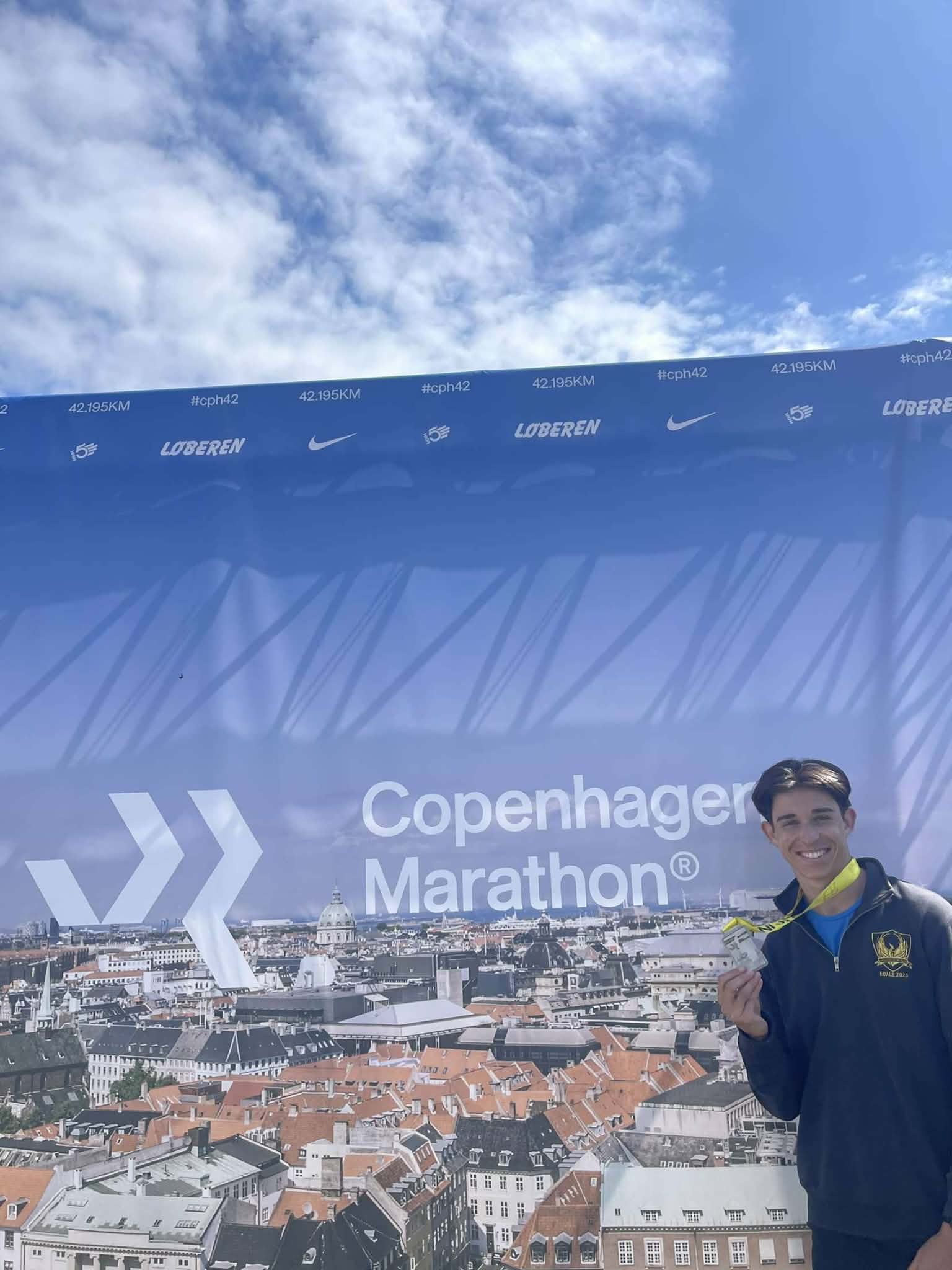
In my fourth year of studies as a chemical and environmental engineer, the Liveris Academy Travel Grant enabled me to undertake one of the most formative experiences of my life, both academically and personally, by enabling me to go on a semester-based exchange at the Technical University of Denmark in Copenhagen. While I initially saw the exchange as an opportunity to broaden my studies, experience Europe for the first time, and meet new people, it ultimately became a major period of leadership development. I have always strived to put myself into the positions and places that will enable me to grow and learn the most, and this was particularly the case with my exchange semester. Living and studying in Denmark, combined with the extensive travel I undertook across Europe, challenged me to adapt, reflect, communicate, and grow in ways that cannot be achieved whilst within the familiar comfort of Australia.
Academic Growth
One of the most profound areas of growth involved better understanding my professional and academic goals. Denmark is a global leader in the green transition, and being immersed in this ecosystem of innovation and environmental leadership shifted my perception of engineering from being more of a technical discipline, to instead how it can be a form of societal leadership.
As such at DTU, I had an amazing opportunity to undertake a curriculum that pushed me into the complexities of the climate crisis. I chose to embrace this opportunity by focusing my studies on environmental electives, including climate change, hydrogen fuel technologies, electrochemical battery technologies, ecology, global air pollution modelling, and fisheries and aquaculture . This represented a significant change in direction within my studies and helped me recognise where my strongest passion lies, being to use science and engineering to drive environmental change.
This academic shift was also a leadership lesson in itself. Leadership is not only about guiding others but it is also about having the courage to explore options and pursue a path that matters to you. Choosing subjects aligned with environmental sustainability showed me that effective leadership requires conviction. I learned to be more intentional about what I value and what kind of impact I want to have. Rather than simply continuing along the most familiar academic pathway, I used the exchange to realign my studies with a broader purpose. That process developed my capacity for reflective leadership, where decisions are grounded not just in achievement, but in values and long-term contribution.
Connection Growth
 Another major area of growth came from the people I met. Through student residency life, classwork, sport, and social activities, I was able to form friendships with students from an extraordinary range of countries, disciplines, and cultural backgrounds . This was one of the most enriching aspects of my exchange. I built relationships with people from all continents, and these connections gave me daily exposure to perspectives, traditions, and ways of thinking that were very different from my own. In particular, I became close with French, South American and Canadian students, and these friendships, along with many others, remain important to me today .
These interactions developed my leadership by making me a better communicator and listener. In multicultural environments, assumptions can quickly become barriers. I learned to ask more thoughtful questions, to be curious rather than judgemental, and to adapt the way I communicated depending on the context. I also had opportunities to practise my Spanish and French, which reinforced the value of embracing conversations with all viewpoints and making an effort to connect across difference . As a leader, this matters greatly. Leadership in the modern world increasingly requires the ability to work across cultures, to understand diverse motivations, and to build trust among people with different experiences. My exchange gave me real, lived practice in doing this.
Living in an international student environment also taught me the importance of creating connection, supporting others, and contributing positively to a community. In student housing and social settings, everyone was adjusting in some way. Because of that, small acts of inclusion mattered. Inviting someone to an activity, making an effort to listen, or helping organise plans could make a significant difference. I began to recognise that leadership often emerges in ordinary moments through reliability, openness, and empathy. These are qualities I developed more strongly during my time abroad because I saw firsthand how much people value those who help make unfamiliar environments feel welcoming.
Cultural Growth
 The most notable growth in my world understanding and leadership, and also the most fun part of my experience, came from my travels across 18 countries. Travelling through cities such as London, Paris, Prague, and Budapest, exploring the Lapland region of Sweden, hiking through mountainous areas in Spain, hitchhiking through Albania, and spending time eating my way across Spain, Portugal, Italy, and Greece is only a glimpse into the amazing variety of experiences I was fortunate enough to undertake, and is something that will stick with me for the rest of my life. Within these travels I was fortunate to learn extensively about a variety of histories, visiting incredible cities and monuments. I was also able to engage with cultures through food and cultural experiences, and by exploring small towns in little visited areas. Most importantly, I found that my learning came most significantly by engaging with locals beyond just those in the touristy areas, as it was these conversations which really allowed me to understand the essence of the cultures of different countries.
Travel at this scale was incredibly exciting, but it also required adaptability, judgement, and problem-solving. Plans often changed, transport was missed more times then I am willing to admit, language barriers arose in difficult situations, and, being a student, budgets were always difficult to maintain and protect. For all of these, decision had to be made fast in the face of stress, and whilst often difficult these decisions were also incredibly exciting and educational.
Through these travels, I became much more resilient. I learned how to remain calm when things did not go to plan and how to make sound decisions with limited information. Backpacking and hitchhiking in particular required a high degree of trust, situational awareness, and confidence. It also demanded responsibility, not only for myself but often for the people I was travelling. Whether I was travelling with my partner who was also on exchange, friends from DTU, or people we met along the way, I frequently found myself contributing to decisions, logistics, and group direction. Those experiences helped me understand that leadership is often practical. It can mean making a plan, adjusting when circumstances change, and helping others stay positive and focused in uncertain situations.
Travel also deepened my cultural intelligence. Seeing different countries firsthand made me more aware of how history, geography, politics, and social values shape people’s lives. For example, experiencing the distinct identities of places across Southern, Central, and Northern Europe showed me that there is no single way to live, learn, or lead. This broadened my worldview and challenged me to think more critically about my own assumptions. A good leader cannot operate with a narrow perspective with adaptation to new contexts being critical along with the need for humility and the ability to engage with complexity. Exchange and travel taught me that the more I learned about others, the more thoughtful and grounded my own decisions became.
Leadership Growth
 A particularly important lesson from this experience was the relationship between confidence and humility. Before exchange, leadership may have seemed to me more closely associated with confidence, decisiveness, and visible action. While those qualities are still important, my time abroad taught me that humility is equally essential. Being in new countries and meeting people from vastly different backgrounds reminded me that I did not have anywhere near all the answers and often challenged my perspectives. There was always more to learn: from classmates discussing global environmental issues, from friends sharing their perspectives on culture and identity, and from the histories embedded in every place I visited. This awareness made me more open-minded and reflective. I became more comfortable learning from others, admitting when I did not know something, and allowing new experiences to reshape my views. In my view, that is a much stronger foundation for leadership than confidence alone.
Importantly, this experience also showed me that leadership is not confined to formal titles. I did not need to hold an official position during exchange to grow as a leader. Instead, leadership emerged through how I approached challenges, how I built relationships, how I supported others, and how I responded to unfamiliar situations. Whether in the classroom, in shared student spaces, or while navigating new countries, I was constantly developing the habits and mindset of leadership. This makes the experience especially meaningful to me, because it showed that leadership can be cultivated intentionally through everyday choices and experiences.
Ultimately, my semester in Denmark and the travels associated with it had a transformative impact on my leadership development. Academically, it sharpened my commitment to environmental engineering and showed me how leadership can be used to address global sustainability challenges. Socially, it taught me the value of empathy, inclusion, and cross-cultural communication. Personally, it strengthened my resilience, adaptability, confidence, and self-awareness. All in all, this was an incredibly rewarding journey of growth and something I recommend other students to undertake as well.


